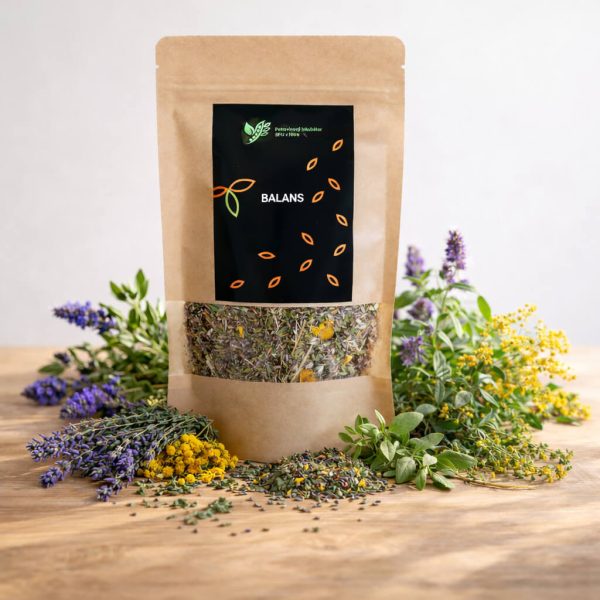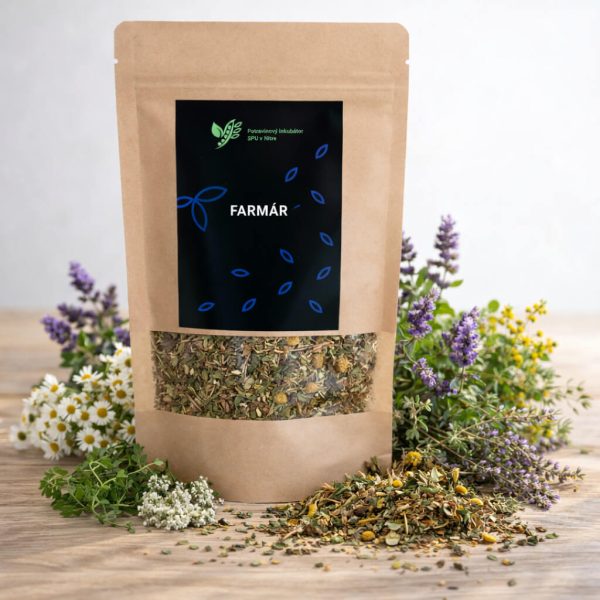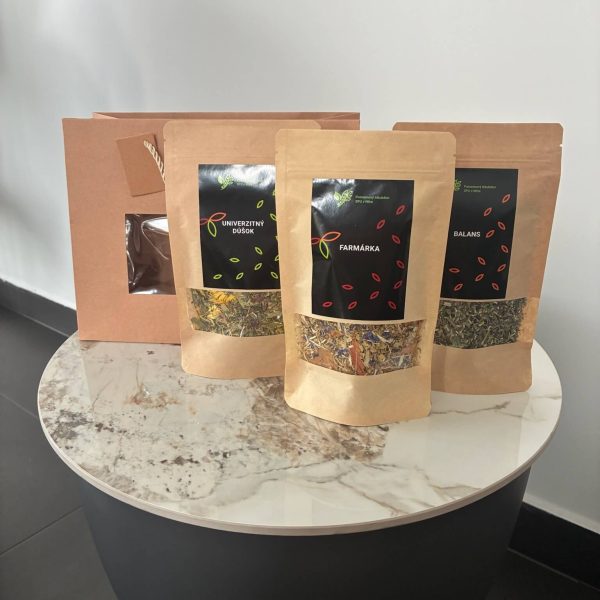
Discover teas and herbal blends featuring Agrimony (Agrimonia eupatoria), characterised by tiny yellow flowers arranged in long, spike-shaped clusters. Its dried flowering aerial parts give the infusion a characteristic herbal aroma and subtly bitter flavour.



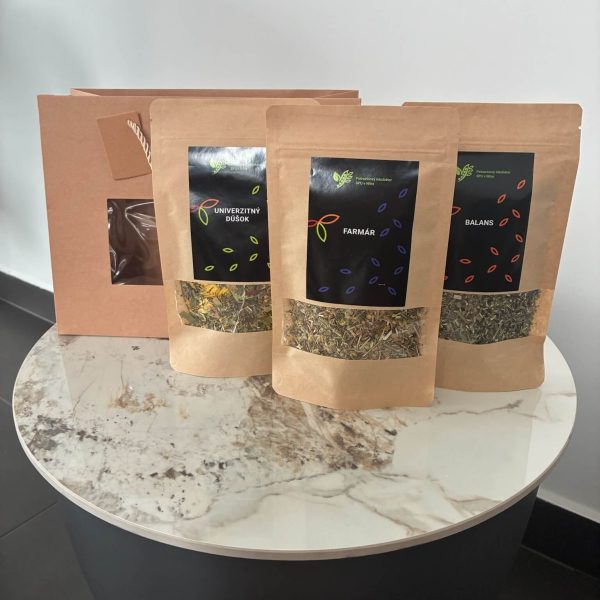
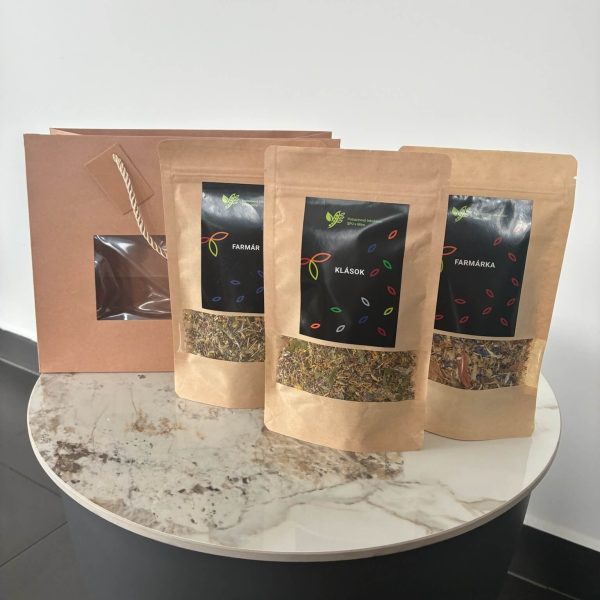
This category features original herbal combinations created in our Food Incubator. Agrimony can be paired with aromatic leaves, meadow flowers and milder-tasting plants that balance its more distinctive herbal profile.
You can prepare your chosen blend as a hot infusion or, if recommended for the individual product, serve it chilled as a refreshing herbal drink. Follow the instructions on the packaging regarding the amount of tea, water temperature and brewing time.
Agrimony is a well-known plant in European folk herbalism. Its flowering aerial parts were primarily collected, dried and used to prepare infusions, decoctions, gargles, compresses and multi-herb blends.
In traditional practices, Agrimony infusion was mainly associated with the period after meals and digestive comfort. This subtly bitter and astringent herb was added to blends prepared for feelings of fullness, sensitive digestion or discomfort in the stomach and intestines.
Agrimony was also traditionally used to prepare herbal gargles and rinses. These were associated with caring for the mouth, throat and mucous membranes.
It also had a significant place in topical herbal preparations. Decoctions, compresses and baths made from agrimony were used in traditional care for stressed skin and minor surface blemishes. The plant also appeared in blends associated with the urinary system, liver and gallbladder.
Agrimony’s flowering aerial parts naturally contain several groups of plant compounds. The most notable include tannins, flavonoids, phenolic acids and triterpenes. Compounds studied include agrimoniin, catechins, rutin, hyperoside, isoquercitrin and various derivatives of luteolin and apigenin.
Tannins contribute to the infusion’s characteristic mildly astringent flavour. The amounts and proportions of individual compounds may vary depending on the growing conditions, harvest period, part of the plant used and drying or processing method.
Laboratory and preclinical research focuses primarily on the antioxidant, anti-inflammatory and antimicrobial activity of agrimony extracts. Researchers also investigate mechanisms associated with glucose and lipid metabolism, liver activity and cellular responses to oxidative stress.
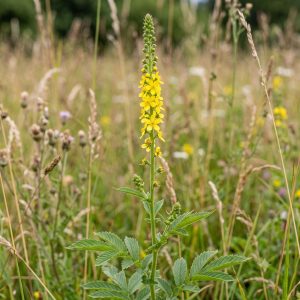
Agrimony produces upright stems with alternate, pinnately divided leaves. Its tiny yellow flowers open gradually along long, spike-shaped clusters. After flowering, fruits with hooked bristles develop and attach to animal fur or clothing. The dried flowering aerial parts are primarily used in tea blends.